
GitLab
Complete DevOps platform in a single application
Overview
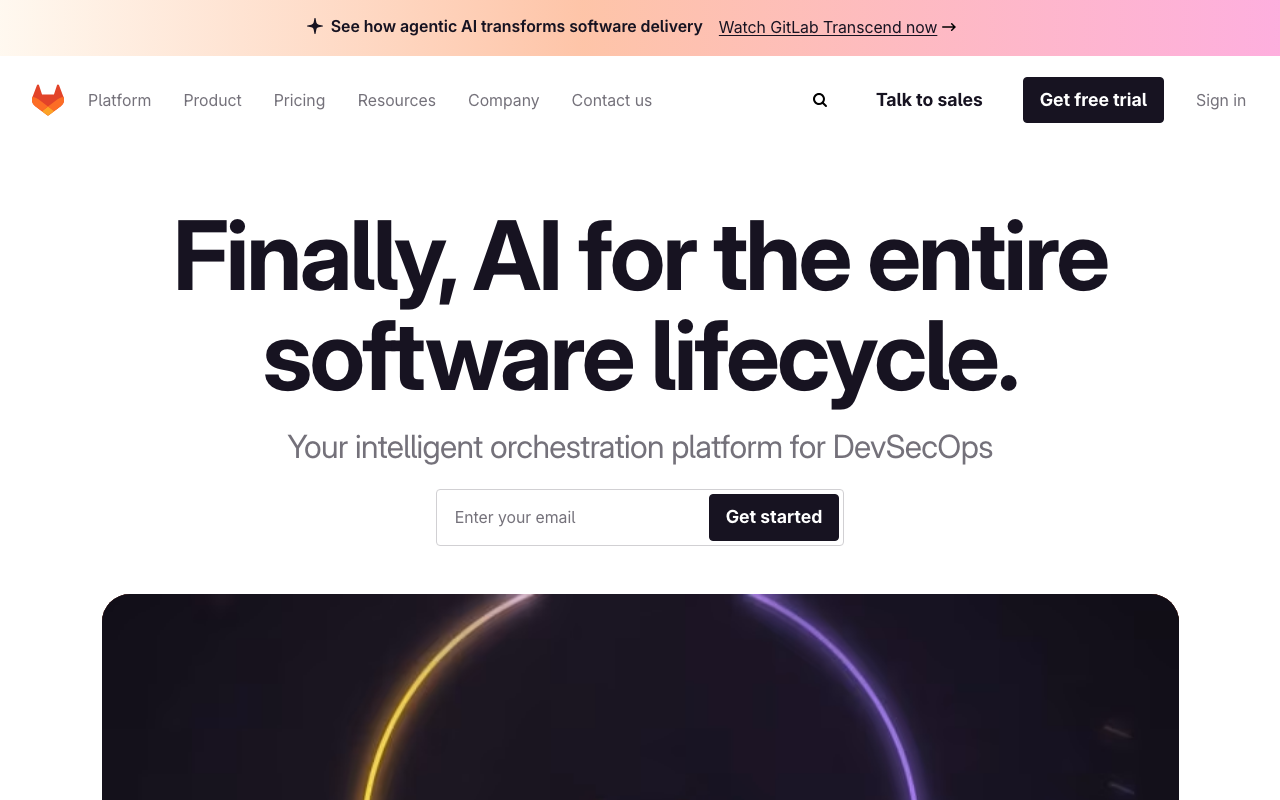
GitLab is a comprehensive DevOps platform that covers the entire software development lifecycle from planning to monitoring in a single application. Originally created in 2011 by Ukrainian developer Dmytro Zaporozhets and co-founded by Dutch entrepreneur Sytse Sijbrandij, GitLab was formally incorporated as GitLab B.V. in Utrecht, Netherlands in 2014 before restructuring as a US corporation in 2015. Despite the US incorporation, GitLab maintains significant European operations and its open-source roots in the European developer community.
The platform provides Git repository hosting, built-in CI/CD pipelines, a container registry, issue tracking, code review tools, security scanning (SAST, DAST, dependency scanning), a package registry, wikis, and static site hosting through GitLab Pages. GitLab's single-application approach eliminates the need to integrate multiple separate tools, giving development teams a unified experience from code commit through production deployment. The platform supports both SaaS and self-managed deployments, allowing organizations to host GitLab on their own infrastructure for complete data sovereignty.
GitLab offers a generous free tier that includes unlimited private and public repositories, 5GB of storage, and 400 CI/CD minutes per month. The platform holds ISO 27001 and SOC 2 certifications, is fully GDPR compliant, and provides EU-hosted options for organizations that require European data residency. With over 30 million registered users and contributions from thousands of community members, GitLab has established itself as the leading open-source alternative to GitHub for teams that value transparency, self-hosting capabilities, and integrated DevOps workflows.
Features
Pricing
Quick Info
- Headquarters
- Utrecht
- Founded
- 2011
- Employees
- 2000-5000
- Data Centers
- EU US