Online Databases
Managed database platforms and no-code database tools for building applications, tracking workflows, and organising structured data. European database services keep your records on EU servers with strong access controls and encryption at rest.
What to Look For
GDPR Considerations
Databases are where your most structured and queryable personal data lives, from customer records to employee information. GDPR mandates strict controls on who can access this data and where it is stored. European database providers offer transparent data processing agreements, EU-only storage, and full compliance with the right to erasure and data portability requirements.
How to Choose
With 5 European online databases options available, choosing the right one depends on your priorities. Here's a quick guide:
On a budget or just exploring
Baserow, Directus, Aiven, ClickHouse, CrateDB offer free tiers
Need code transparency or self-hosting
Baserow, Directus, ClickHouse, CrateDB are open source
Enterprise procurement requirements
Aiven holds ISO 27001
Specific data residency requirements
Data hosted in Finland, Germany, Austria
European Online Databases Software

Baserow
Open source no-code database platform

Directus
Open source headless CMS and data platform

Aiven
Managed open source database and streaming platform from Finland

ClickHouse
Open source column-oriented database for real-time analytics
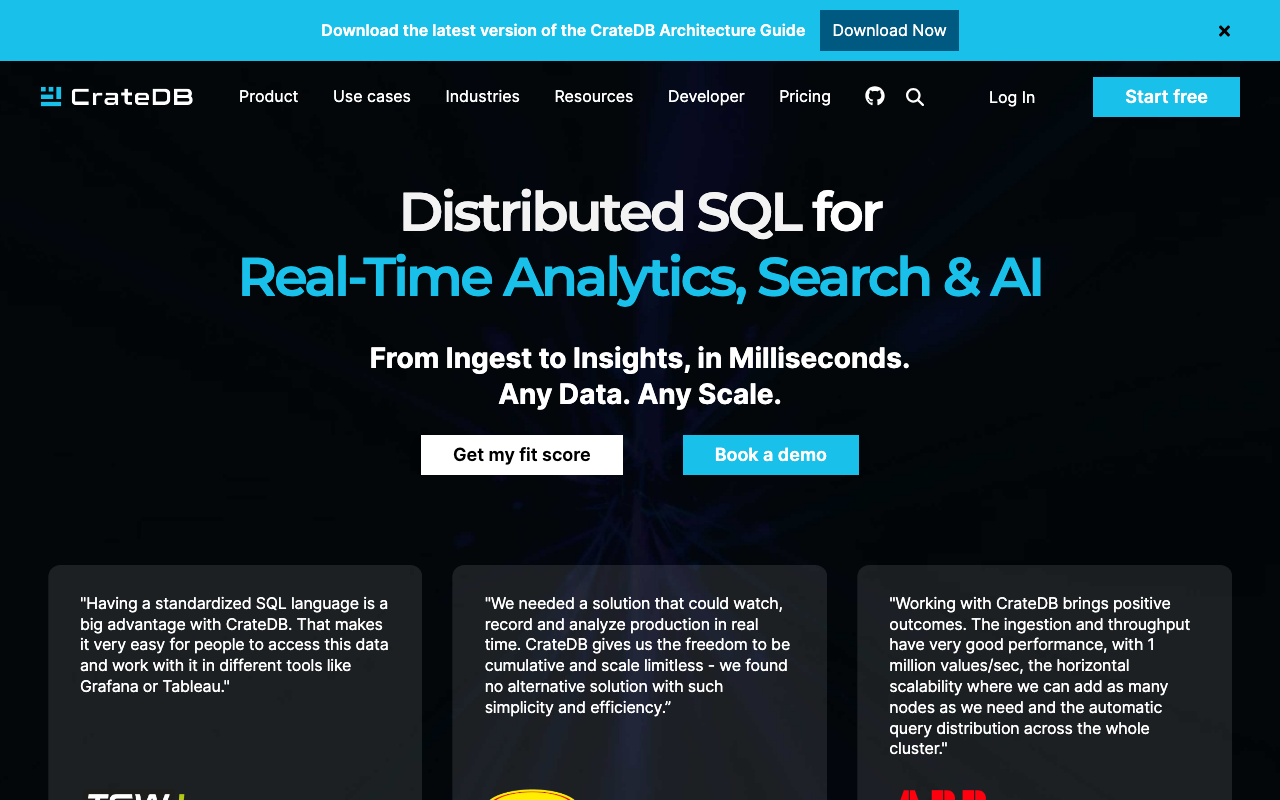

CrateDB
Distributed SQL database for time-series and IoT data from Austria
Compare Online Databases Products
Online Databases by Country
Looking for US alternatives?
European alternatives to Airtable
European alternatives to Google Sheets
European alternatives to Coda
European alternatives to Contentful
European alternatives to WordPress.com
European alternatives to MongoDB Atlas
European alternatives to Snowflake