Accounting & Invoicing

Business accounting, bookkeeping, and invoicing software for managing finances, tracking expenses, and generating tax reports. European accounting platforms store your financial records and client data within the EU, combining GDPR compliance with local tax regulation support.

What to Look For

Invoice generation
Expense tracking
Bank reconciliation
Tax reporting
Financial dashboards

GDPR Considerations

Accounting software processes a uniquely sensitive combination of personal and financial data: client names and addresses, bank account details, invoice amounts, payment histories, employee salary information, and tax identification numbers. Under GDPR, financial data linked to identifiable individuals is personal data, and its mishandling can result in both GDPR penalties and financial regulatory consequences. European accounting platforms offer a dual advantage: they store all financial and personal data within EU jurisdiction under GDPR protection, and they natively support European tax requirements including VAT calculations, country-specific reporting formats, and e-invoicing standards. US-based tools like QuickBooks or Xero may lack native support for EU tax regulations while also processing your financial data outside European jurisdiction.

How to Choose

With 2 European accounting & invoicing options available, choosing the right one depends on your priorities. Here's a quick guide:

Enterprise procurement requirements

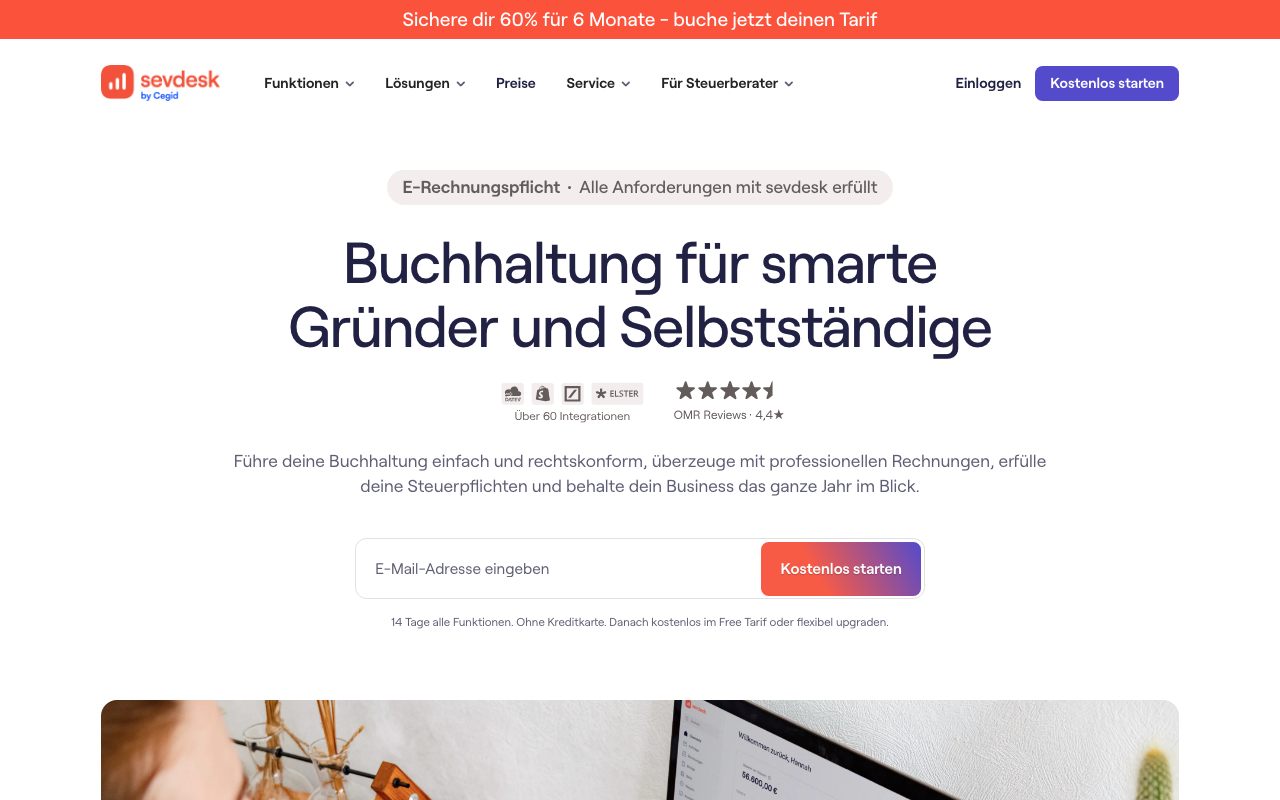
sevDesk holds ISO 27001
European Accounting & Invoicing Software

Compare Accounting & Invoicing Products

Accounting & Invoicing by Country

Looking for US alternatives?

Accounting & Invoicing — Frequently Asked Questions

Is QuickBooks or Xero suitable for EU businesses under GDPR?
QuickBooks (Intuit, US) and Xero (New Zealand/Australia) are both non-EU companies that process financial data on infrastructure outside the EU. Your client invoices, bank transactions, employee payroll data, and tax records pass through non-European servers. While both offer data processing agreements, the underlying jurisdictional risk remains. Additionally, US-based accounting tools often lack native support for EU-specific tax requirements like country-specific VAT reporting, e-invoicing mandates, and local chart of accounts standards. European alternatives solve both the GDPR and tax compliance challenges simultaneously.
How long must accounting data be retained, and does this conflict with GDPR?
EU member states require financial records to be retained for periods ranging from 5 to 10 years depending on the country. This creates a tension with GDPR's data minimization principle. The resolution is that legal retention obligations provide a lawful basis for keeping accounting data during the required period. However, once the retention period expires, you must delete personal data that is no longer needed. European accounting platforms understand these country-specific retention requirements and can automate the transition from mandatory retention to GDPR-compliant deletion.
Do European accounting tools support multi-country VAT and e-invoicing?
Yes, this is one of the key advantages of European accounting software. Tools built for the EU market natively support intra-community VAT rules, reverse charge mechanisms, country-specific VAT rates, and the growing wave of mandatory e-invoicing across Europe (Italy, France, Germany, and Spain are all implementing or planning e-invoicing mandates). US-based tools typically treat EU tax requirements as add-ons or third-party integrations. European platforms also generate financial reports in formats accepted by local tax authorities, reducing the friction of cross-border compliance.
See only GDPR-compliant Accounting & Invoicing